After an unsuccessful Onion Harvest this year, I’ve started looking at companion planting for next year so I can be ready for next Spring and hopefully generate higher yields, better volume and avoid pests.
I’ve learned that companion planting works because it is more akin to nature, with diversity of plants instead of the single crop method used in western farming which allows pests and disease to spread more rapidly. If you want to see a great example of how diversity in farming is kinder to nature and the land please check out The Biggest Little Farm which is a 2018 documentary that inspired me to become a gardener.
Companion planting allows plants to protect each other from pests that love one plant but not the other, creates shade, and uses space more wisely so you can grow more.

Companion planting is not a new thing, 300 years ago when colonial settlers arrived in North America, the indigenous peoples of the land shared with them the Three Sisters Planting method. Corn, Beans and Squash were planted together in one space. The corn grows up to provide support for the beans, and the squash is planted around the outside of space/bed to provide ground cover.
I’ve decided to start by looking at the crops I like to grow the most of:
- Tomatoes
- Carrots
- Onions
- Squash & Pumpkins
- Peppers
- Potatoes
- Garlic
- Brussel Sprouts
I’ve read around other blogs, the Farmer Almanac, and gleaned what I can from the YouTubers I follow, learning from their wisdom and successes.
I have 264 square feet of garden bed space to produce as much food as possible not only for the summer, but also for winter storage. We give our excess to our local food bank and community pantries and I urge you to do the same. No one has been left unaffected by the cost of living increase, and some families struggle to afford fresh produce. Most food banks take half stable foods which are more likely to be highly processed, so plant extra if you have space and give it away. I’ve used the food banks myself on occasion and when I received fresh tomatoes that had been donated by some local growers, I was inspired to do the same. Thank you to those anonymous gardeners for their generosity, you literally made my summer!
Companions for my favourite crops:
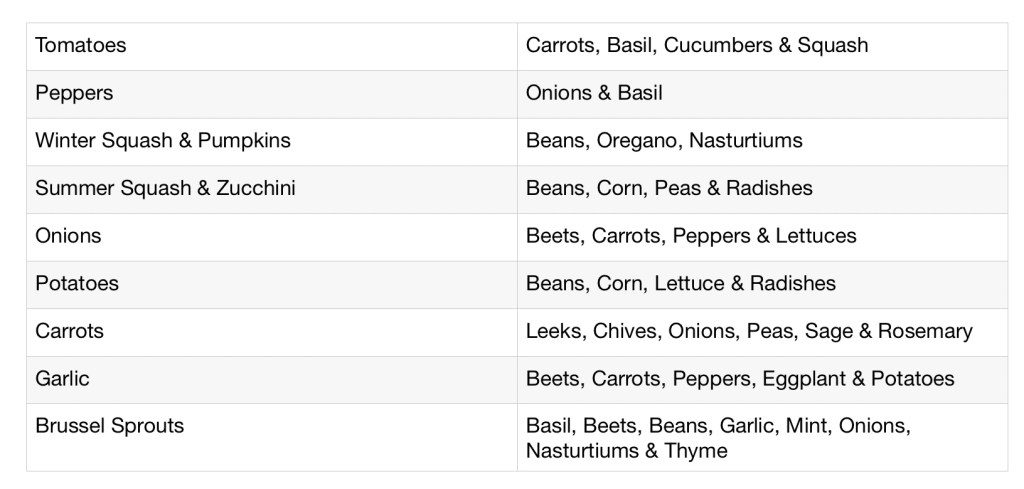
Currently in my garden I have Tomatoes, Peppers, Summer Squash, Winter-squash, Cucumbers, Onions, Kohlrabi, Carrots, Parsnips, Radishes, Beets, Pole Beans, Bush Beans, Nasturtiums, Potatoes, Eggplant, Peas, Melons and Lettuces.
From the list above the only ones that are companion planted (accidentally) are the tomatoes, carrots and basil, Bush beans with potatoes and some radishes with squash. I guess this is what happens when you’re building beds and planting as you go, rather than planning your garden methodically! Never a Failure, Always a Lesson!
I have never grown a three sisters garden myself but found this useful article about how to start a three sisters garden. I plan to give it a go next year, and will share the results. I’ll also be carefully planning my planting to see if it affects how much food I am able to grow by weight.
If you know of resources that you’ve found helpful for companion planting please feel free to share them with me in the comments. I’m on a steep learning curve and this is the first year I’ve had a fully planted garden.
Grow – Eat – Repeat!
I’m incredibly grateful for the freedom to be able to grow my own food and the space to do so. I respectfully acknowledge that I live and work on the Tla’amin Nation territories. I am also grateful to God for bringing me to this beautiful place and blessing me with the abundance of this garden.
 Moon Snail Microstead